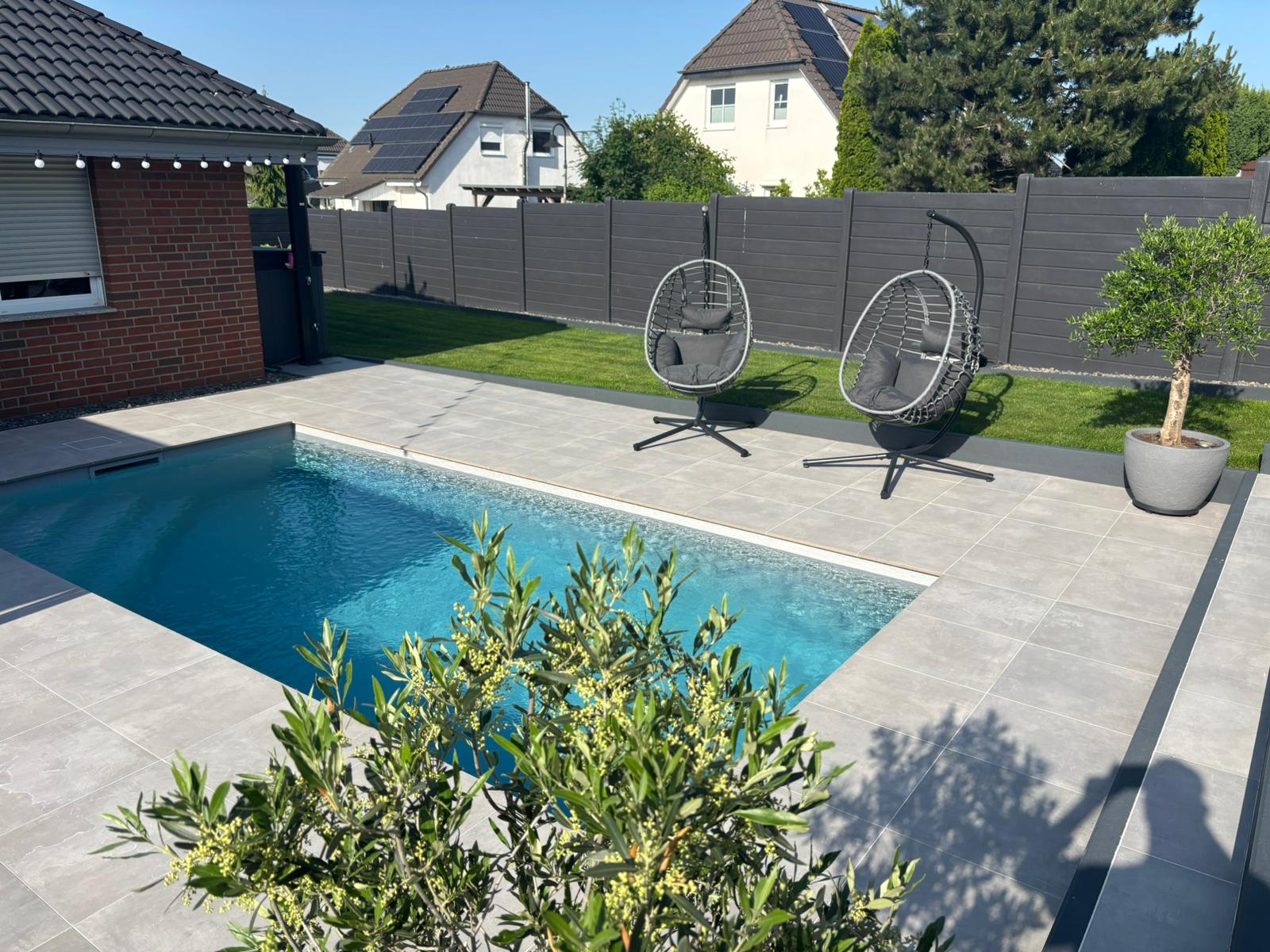
PP vs. GFK – Which Pool to Choose and Why It Matters?
Why choosing the right pool shell matters
A garden pool is a long-term investment, which is why selecting the right type of pool shell is essential. The two most common types on the market are polypropylene (PP) pools and those made of fiberglass-reinforced plastic (GFK). While they may seem similar at first glance, the differences go far beyond the name. Polypropylene clearly holds the upper hand, while the biggest drawback of GFK is a hidden threat known as osmosis.

Material resistance and the risk of osmosis
Polypropylene is a modern material that resists UV radiation, pool chemicals, and fluctuating weather conditions. It has a homogeneous, non-porous, waterproof structure that is easy to clean and does not absorb moisture or substances. In contrast, GFK, made from resins and fiberglass, is prone to microcracks, discoloration, and weakening over time. Most importantly, it is susceptible to osmosis—a slow chemical process where water penetrates the laminate, creating blisters, delaminations, and irreversible damage that often requires costly repairs or full pool replacement. PP, being osmosis-proof, offers a clear technical advantage.
Flexibility in design and shape
Polypropylene pools are fully customizable. They can be manufactured in almost any shape or size and easily adjusted to unusual garden layouts or modern terraces. GFK pools, on the other hand, are made in pre-molded forms, which limits design options and personalization. For homeowners looking for tailored solutions, PP offers far more freedom.
Everyday use and maintenance
In daily use, PP pools are more practical. Their smooth surface resists buildup and is easy to keep clean without strong chemicals. GFK pools have micro-pores that trap dirt and algae, requiring more intensive cleaning and care. Over time, this means more maintenance and potentially higher costs.
Sustainability and repairability
Polypropylene is fully recyclable and safe for the environment. Minor repairs can be made easily and quickly without much cost. GFK, due to its complex structure, is more difficult to repair and recycle, making it less sustainable in the long run.
Stairs – ready-to-use vs. requiring concrete support
Fiberglass (GFK) pools often come with pre-formed stairs, but due to their weight and structural demands, these require a concrete base or collar poured on-site to ensure proper support and integrity. In contrast, polypropylene (PP) shells include integrated stairs that are immediately ready for use once installed—no additional concrete work needed. This simplifies and speeds up installation significantly.
Plumbing installation – on-site build vs. plug‑and‑play
With GFK pools, plumbing systems—pipes, filters, pumps—must be custom-designed and assembled on-site. This involves fitting pieces together precisely and often delaying installation due to site-specific work. PP pools, however, come with factory-built plumbing systems that are plug‑and‑play: all hoses, connections, and modules are pre-configured, requiring only straightforward on-site connection. This approach reduces installation time, complexity, and potential errors .
Conclusion: Why PP wins
If you value durability, design flexibility, and a pool solution that eliminates the risk of osmosis, the choice is clear: a polypropylene pool. It’s a modern, safe, and long-lasting investment that suits both private gardens and commercial applications. At Poolcomplex, we manufacture custom PP pools that fit your needs perfectly and give you peace of mind for years to come.